
ISS report calls for enhanced measures to combat police corruption in South Africa
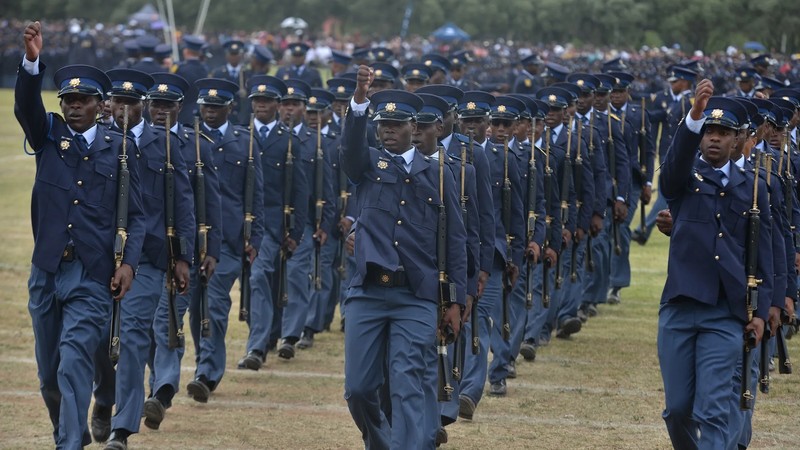


The Institute for Security Studies (ISS) has called for the SAPS to strengthen its internal Anti-Corruption Investigation Unit (ACIU) to increase its ability to identify and investigate members and other police who are involved in corruption in order to reduce the scourge.
This, according to the ISS report titled ‘Tackling police corruption in South Africa’, could be strengthened by enhancing the capacity for the SAPS’ detention and investigation.
The ACIU was established in 2017 to focus on criminal investigations against police members involved in corruption. This was a response to concerns that existing structures were insufficient.
The report, authored by David Bruce and Gareth Newham, stated that police corruption is the most widespread form of official corruption in South Africa.
Bruce is an independent researcher on policing and a consultant with the ISS. Newham, who is currently the special advisor to the Minister of Police, was head of the Justice and Violence Prevention Programme at the ISS.
Police in South Africa, including the SAPS and many metro police and traffic policing agencies, are affected by high levels of corruption.
The report comes as the Madlanga Commission of Inquiry and a Parliamentary Ad Hoc Committee continue to receive extensive evidence of widespread police corruption, criminal infiltration and political interference within the criminal justice system.
Both the Madlanga Commission and the Ad Hoc Committee have been established to investigate serious allegations of criminality, political interference and corruption within the criminal justice system, particularly the SAPS. Both bodies were established to probe the public statements made by the KwaZulu-Natal Police Commissioner, Lieutenant-General Nhlanhla Mkhwanazi, on June 6, 2025, which alleged systemic corruption and interference by top leadership.
The ISS report stated that corruption involving senior police is concerning as it has a deeply destructive impact on organisational culture.
The report added that top-ranking police may also use their authority and networks within the organisation to prevent or interfere with investigations against them. This can include destroying evidence and undermining the police officers who may be tasked with investigating them.
The report also stated that the ACIU unit indicates that it makes between 300 and 400 arrests of allegedly corrupt police members, including metro police, annually, but no mention is made of the unit in SAPS annual reports, and there is no publicly reported information on its caseload or other aspects of its performance.
“The current decentralised structure of the ACIU, with the bulk of personnel falling under Provincial Commissioners, makes it more vulnerable to interference in investigations. This is not the ideal structure for an anti-corruption unit. A national unit can also be subjected to interference, but it is more practical to ensure that one national unit is protected from such pressure than diverse provincial units,” it reads.
The report added that since the criminal conviction of Jackie Selebi, who was SAPS National Commissioner from 2000 to 2008, numerous other top officers have been convicted or are alleged to be implicated in crime and corruption.
“In July 2025, President Cyril Ramaphosa appointed the Judicial Commission of Inquiry into Criminality, Political Interference and Corruption in the Criminal Justice System – or Madlanga Commission – to examine wide-ranging allegations made by SAPS KwaZulu-Natal Provincial Commissioner Lt-General Nhlanhla Mkhwanazi at a media briefing earlier that month. Parliament also established an ad hoc committee to investigate the allegations.
“At Mkhwanazi’s media briefing and in testimony before the inquiries, allegations were made that Police Minister Senzo Mchunu and Deputy National Commissioner for Crime Detection Lt-General Shadrack Sibiya interfered with police investigations to protect criminal syndicates they were allegedly linked to. During appearances before the inquiries, Mchunu and Sibiya disputed these allegations,” read the report.
The testimony has exposed a web of corruption from senior SAPS officials and metro police (Ekurhuleni Metro Police Department was specifically implicated) to politicians and the judiciary, highlighting a systemic failure of the justice system.
Research evidence has consistently shown that corruption is entrenched in policing in South Africa.
Since 2003, seven out of nine Statistics SA surveys on bribery have listed police and traffic police law enforcement as one of the two government services most often linked to bribery.
Afrobarometer surveys corroborate Stats SA findings, with the 2022 survey showing that between one fifth (19%) and one quarter (25%) of those interviewed said they had been asked to pay a bribe to police.
According to ISS, the current South Africa’s approach to addressing police corruption is fragmented and incoherent. Various agencies investigate police corruption, but none of them has the principal responsibility to do so.
manyane.manyane@inl.co.za