
Gauteng's economic boost: R1 billion from the G20 Summit and beyond
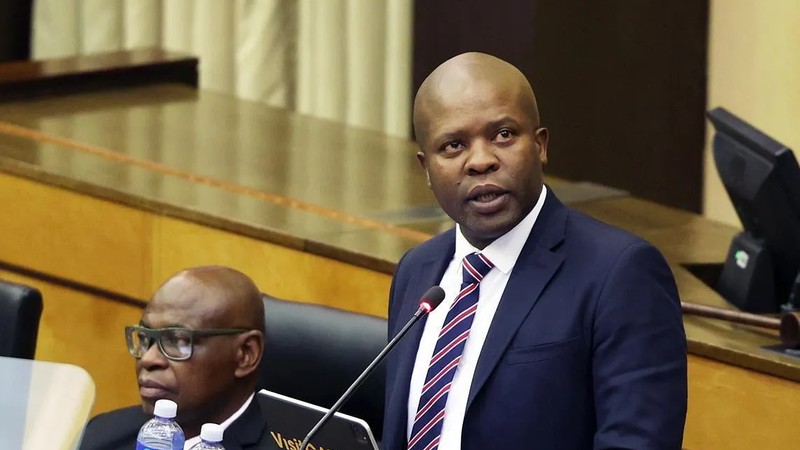

Gauteng Finance MEC, Lebogang Maile, has confirmed that the hosting of the recent G20 Summit in the province has generated more than R1 billion for the provincial coffers.
Maile, who delivered the province’s Medium Term Budget Policy Statement and Adjustment Budget to the Gauteng Legislature on Tuesday, said this revenue boost highlights the economic impact of international events on the province, with benefits spanning tourism, hospitality, and local businesses.
With the province set to host other big events in the coming months, Maile emphasised that such initiatives contribute significantly to Gauteng’s growth and investment potential.
“By welcoming the G20 visitors into the province and successfully hosting them, Gauteng has once again demonstrated its capacity and strength for facilitating high-quality events. According to the National Department of Tourism, early data indicate that the province generated more than R1 billion from hosting the G20 Summit. This is a significant injection into the fiscus, coming at a time when resource constraints continue to pose a significant challenge to public services for our country’s increasing population,” he stated.
Gauteng is set to utilise major events, such as the recently secured global golfing tournament, LIV Golf, to boost provincial revenue, as stated by Maile.
The decision to host the LIV Golf event was highlighted by Gauteng Premier Panyaza Lesufi last week. He indicated that the tournament would benefit Diepsloot and other townships facing service delivery issues.
This is part of ongoing efforts to beautify townships and the inner city, a drive that will continue long after the G20 Summit has ended.
Gauteng has recently announced a major partnership with the South African Breweries and the LIV Golf League to host a significant tournament.
Scheduled for March 2026 at Steyn City, the event has reportedly already sold 60,000 tickets, anticipating a large influx of local and international visitors to the province.
Maile emphasised the substantial revenue potential of hosting such major sporting events: “We are confident that by making deliberate, strategic investments in bidding for and hosting catalytic signature events, conferences, and exhibitions, we will significantly boost visitor numbers to the province, generate revenue, foster sustainable small businesses within the sector, and create essential jobs for the people of Gauteng.”
He stated that Gauteng will utilise its 10-point strategy to achieve continued economic growth as the country’s economic hub, focusing on generating new revenue streams and creating employment opportunities.
He said part of this strategy’s main pillars include re-industrialisation through sector support, the promotion of trade and investment, spatial transformation and integration, economic and social infrastructure development, entrepreneurship and small business development support, among others.
“Our strategy is supported by 12-sector master plans to enable policies and strategies which include, among other things, the Township Economy Development Act (Township Economy Revitalisation Strategy), the Informal Business Upliftment Strategy, the MSMEs Strategy, the Trade and Investment Strategy, and the Green Hydrogen masterplan. The Department of Economic Development is currently hosting several sector roundtables, which will culminate in the establishment of the 12 Sector-Specific Action Labs,” he added.
siyabonga.sithole@inl.co.za