
The absence of ethical leadership in Ekurhuleni: A call for accountability


As I sit down to write, an old struggle hymn drifts through my mind: “Oliver Tambo, ndibambe ngesandla sakho”. Hold my hand. Guide me. Steady me. That quiet plea begs a sharper question, where is the principled leadership, the leadership personified by Oliver Tambo, that Ekurhuleni so urgently needs today?
- Where is that humane but uncompromising leadership?
- Where is that disciplined moral centre?
- Where is the clarity of purpose that once held a fragmented liberation movement together through exile, hardship, and political storms?
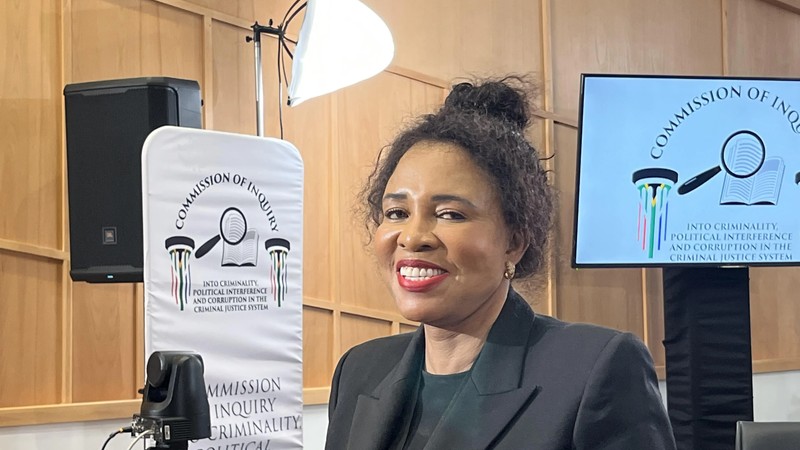
Today, the Madlanga Commission continued its work. In hearings earlier, Dr Imogen Mashazi, former City Manager, presented her side of the story. Once again, her name was at the centre of scrutiny, a reminder of the controversies and governance gaps that have plagued Ekurhuleni for years.
This is not merely a story of municipal mismanagement. It is a warning of what happens when leaders lose sight of the ethical foundations of their power, allowing governance to slip inch by inch until dysfunction and confusion become the norm.
Ekurhuleni has become a theatre where leadership is tested and too often found wanting. Officials treat their roles as decorative rather than functional. Leaders appear defensive when questioned, vague when held accountable, and strangely comfortable with the idea that the municipality can limp forward without strategic direction.
Into this environment, the Madlanga Commission arrived like a hammer. Its findings were not whispers or insinuations; they documented structural failures, governance lapses, blurred authority, and administrative decisions raising serious questions. And at the centre was a recurring figure: Dr Mashazi, whose tenure has become inseparable from the city’s turbulence.
Yet the Commission is about more than individuals. It exposes a culture that allowed failures to thrive, a culture drifting from accountability, transparency, and ethical responsibility.
This is where the ghost of Oliver Tambo becomes impossible to ignore. Not because we expect him to materialise in the mayor’s office, but because Tambo represents something increasingly absent: ethical leadership that prioritises people over personal power.
Imagine what Tambo would do if confronted with Ekurhuleni today:
- Demand discipline, not performative, but quiet, consistent accountability, even when no one is watching.
- Insist on transparency, not selective convenience, but full clarity that strengthens institutions.
- Interrogate every decision. Who benefits? Who suffers? Whose interests are being served behind closed doors?
Tambo believed leadership demands both competence and humility. He would expect leaders to earn trust, not assume it. He would ask why service delivery is failing, why internal conflicts eclipse community needs, and why governance structures bend under pressure. Crucially, he would not tolerate optional accountability.
The Madlanga Commission continues to hold up a mirror to Ekurhuleni, and the reflection is stark:
- Oversight mechanisms are weak.
- Political interference blurs administrative boundaries.
- The City Manager’s office wields too much operational influence.
- Procurement practices raise more questions than answers.
- Governance has become reactive rather than strategic.
- Public trust erodes, slowly but surely.
Dr Mashazi is central not because her name alone defines the crisis, but because her tenure embodies deeper structural issues left to fester. The Commission forces a reckoning with both individuals and an entire leadership culture.
So, when we ask, “Where is Oliver Tambo?” it is not nostalgia we seek. It is accountability. It is standards. It is the courage to confront decay even when politically inconvenient.
The problem is not that we lost Tambo the man. The problem is that we abandoned the Tambo model. We traded discipline for factionalism, service for self-preservation, and ethics for expediency.
Ekurhuleni’s decline was gradual rather than sudden; over time, dysfunction became commonplace and leadership lost touch with its purpose. This is why the hymn feels so touching now.
When we sing, “Oliver Tambo, ndibambe ngesandla sakho,” maybe we are not asking him to guide us. Maybe we are asking today’s leaders why they continue to stray from the path he left behind.
South Africa does not need Oliver Tambo to return. South Africa needs leaders who can stand in his shadow without shrinking.
* Nyaniso Qwesha is a writer with a background in risk management, governance, and sustainability. He explores how power, accountability, and innovation intersect in South Africa’s landscape.
** The views expressed do not necessarily reflect the views of IOL or Independent Media.