
Nusuk Hajj platform effectively replaces SAHUC for SA pilgrims: What you need to know
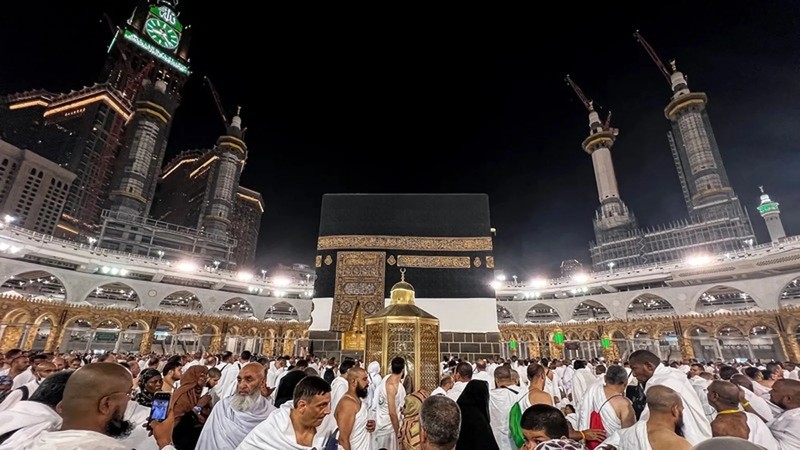


South African Muslim pilgrims will experience several changes as the Saudi Ministry of Hajj and Umrah (MOHU) has mandated that all South Africans wishing to perform the holy pilgrimage must register through the Nusuk Hajj platform.
This decision effectively removes the South African Hajj and Umrah Council (SAHUC), which has facilitated the pilgrimage for the past 30 years.
What changes can be expected?
According to SAHUC, the following changes can be expected.
1. Application and Facilitation Model
South African pilgrims will now be required to register, select, and secure their Hajj packages exclusively through the Nusuk Hajj platform. Applications will be processed strictly on a first-come, first-served basis and willl be subject to availability.
It’s also worth noting that the long-standing SAHUC waiting list, which currently spans 8–10 years, will fall away. Pilgrims must reapply every year if unsuccessful, as the Nusuk platform does not provide a waiting list or queue.
Individuals who have previously performed Hajj are now eligible to apply again on the Nusuk Hajj platform.
2. Quota and Services
The South African Hajj quota has been significantly reduced from 2,500 to 1,140 pilgrims for the 1447 AH/2026 season.
Pilgrims must book their Hajj packages directly with Licensed Saudi Service Providers (SPCs). Due to potential distribution across multiple SPCs, the pilgrim contingent may be split during the five days of Hajj in the Masha’er.
3. Service and Support Structure
SAHUC will not continue with the Hajj facilitation process, and its role will be limited to providing information, guidance, and support for pilgrims transitioning through the platform.
All service delivery-related queries and complaints must now be addressed directly to the Ministry of Hajj and Umrah and/or the Royal Embassy of the Kingdom of Saudi Arabia in Pretoria. Pilgrims will no longer have access to customised support services traditionally provided under the Hajj Affairs model, such as tailored logistical, spiritual, and medical support.
4. Packages and Costs
The package duration ranges from 10 to 21 days, which is shorter than the traditional durations South African pilgrims are accustomed to.
Packages include 3, 4, and 5-star accommodation options. There is a strong possibility that package costs will be higher than what South African pilgrims have historically supported, but ithe exact costs are unknown at this stage.
5. Scholarly Guidance
Scholars (Ulama, Aalims, and Aalimas) who wish to provide spiritual guidance must also apply through the Nusuk Hajj platform. The number of accepted guides who may be remunerated by SPCs will be significantly fewer than those previously available through the Hajj Affairs office model.
Why the changes?
In the statement, SAHUC has also listed reasons for the changes.
The implementation of the Direct Hajj Program in the Republic of South Africa is believed to be part of the Kingdom of Saudi Arabia’s global rollout of this model.
The decision comes from MOHU’s ongoing efforts to facilitate the performance of Hajj rituals for pilgrims of various nationalities.
The transition involves providing electronic services and enhancing the digital transformation of Hajj and Umrah services.
MOHU is establishing an integrated technical infrastructure designed to accommodate diverse needs and ensure that users can access services without obstacles.
The platform provides services directly to the pilgrim without the need for intermediaries, thereby enhancing transparency and credibility.
MOHU states that the Nusuk platform offers post-booking services that facilitate direct communication between the pilgrim and the relevant authorities, allowing for direct assistance.
With regards to the quota allocation, the specific quota allocated to South Africa was determined in accordance with available data and aligns with the proportional allocation given to each country based on the size of its Muslim population.
What else should South Africans know?
In addition to these changes, several other details are important to note regarding the transition.
SAHUC recognises that the transition to the Direct Hajj Model may present challenges for some pilgrims, particularly those who are not technology-savvy or familiar with mobile applications. Since the previous system allowed local support through local offices, pilgrims now must secure and manage their packages directly online.
Pilgrims must withdraw funds from their Digital Wallet on the Nusuk Hajj platform, and a transaction fee may be applicable during this process.
Group registrations will be permitted, limited to a maximum of eight people per group.
While travel operators and SAHUC could negotiate with SPCs to market packages locally, SAHUC has formally abandoned this option as it falls outside its mandate. Some SPCs may include flights in their packages, while others will require pilgrims to arrange their own flights independently
Medical and health facilities will be provided by the Saudi Ministry of Health and made accessible to pilgrims at designated locations throughout the pilgrimage.
In the event of a death in the Kingdom, the deceased’s family will be required to liaise directly with the Consulate of the Republic of South Africa.
The MOHU informed SAHUC that pre-registrations are understood to open approximately four months prior to Hajj, around Rajab 1447 (late December 2025). SAHUC confirmed that it has been engaging with government bodies, including DIRCO and the CRL Rights Commission, and mainstream Islamic bodies concerning this major change.
IOL