
SA National Editor's Forum faces backlash over ‘selective silence‘ following Mkhwanazi allegations
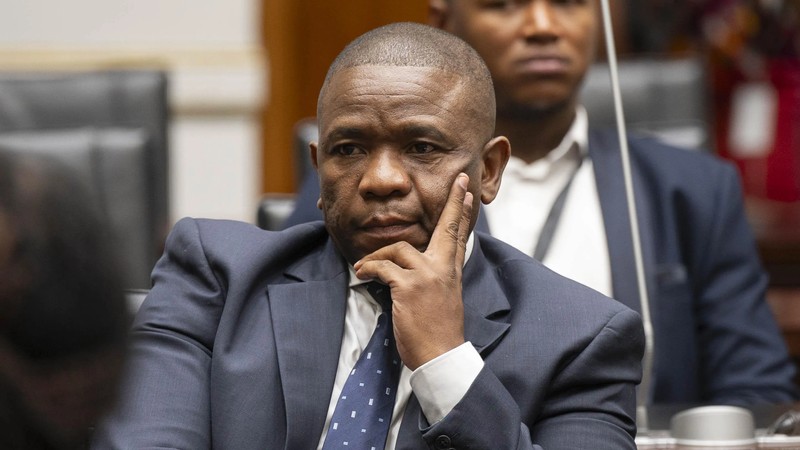

The South African National Editors’ Forum (Sanef) is facing criticism for what one social activist has described as “selective silence” after its condemnation of KwaZulu-Natal police commissioner Lieutenant-General Nhlanhla Mkhwanazi.
Mkhwanazi had accused some journalists of “pushing certain agendas”, prompting a strong response from Sanef, which denounced his comments as undermining media freedom.
However, veteran activist Hassen Lorgat, who has a background in the trade union movement and anti-apartheid sports activism, said Sanef should have engaged Mkhwanazi in dialogue rather than issuing a “blanket condemnation”.
“Mkhwanazi seems to be suggesting that journalists were operating in an underhand manner. One of the things Sanef should do with the commissioner and others is investigate this,” said Lorgat.
“My concern about unethical conduct in journalism is not to undermine the profession but to strengthen it,” he said.
Lorgat believes Sanef missed an opportunity to address ethical concerns within the profession.
“There’s something to discuss about ethics in journalism. Instead of simply condemning, Sanef should have called for a meeting to understand the issues. I don’t think anyone can say categorically that all journalists under Sanef’s umbrella are doing the right thing,” he said.
“At face value, Mkhwanazi’s comments may seem harsh, but Sanef could have said, ‘If there’s a problem, let’s talk.’ That’s what good leadership requires.”
Mkhwanazi, testifying before Parliament’s ad hoc committee probing police criminality, accused certain journalists of colluding with rogue Crime Intelligence officers to push political agendas.
He named journalists from City Press, Sunday Times, and News24, and suggested they should face heavy punishment.
He also claimed a report by the Inspector-General of Intelligence, cited by News24, was classified and should not have been publicised.
In response, SANEF “condemned in the strongest terms” Mkhwanazi’s comments, saying he had deviated from his witness statement and launched “an extraordinary attack on media freedom” by calling for state security agencies to investigate the media.
The forum’s statement sparked mixed reactions on social media, with some users accusing Sanef of overreacting and losing objectivity.
Lorgat said Sanef should have taken a more constructive approach.
“If there are real allegations of wrongdoing, SANEF should say, ‘Come to us, let’s talk,’ and then respond appropriately. It’s not untrue that some journalists do the bidding of political factions. That’s why the Katharine Satchwell report on state capture, and the Zondo Commission, were important – Sanef itself helped initiate that inquiry.”
He suggested Sanef consider holding a “mini-inquiry” or internal review to assess the situation rather than issue a “blanket defence.”
Meanwhile, ActionSA leader Herman Mashaba, like ordinary citizens, also questioned SANEF’s response.
He asked why the forum had criticised Mkhwanazi for raising possible concerns about bias in journalism.
“Why would Sanef lash out at Mkhwanazi for accusing certain journalists of pushing agendas? Very weird reaction,” Mashaba wrote on X (formerly Twitter).
Asked about Mashaba’s comments, Lorgat said Mashaba was “joining a wider public concern” but cautioned against politicising the issue.
“When the media is compromised, they can’t hold politicians accountable,” Lorgat said.
“Mashaba must not play politics – he must be principled. He is joining the rest of us who think journalism needs introspection, but he’s not unique.”
Lorgat also criticised Sanef and other media watchdogs for their silence on earlier ethical controversies, including journalists’ participation in sponsored trips to Israel.
“Sanef, Media Monitoring Africa, and others have not commented on those incidents. They have been selective, which undermines credibility,” he said.
He added that SANEF should avoid defensiveness and instead lead a process of reflection and reform.
“Mkhwanazi may be wrong or right, but he raised serious questions. He named journalists, MPs, even judges. That shows a broader crisis – and SANEF can’t just say, ‘We are clean,’ without investigating.”
Asked whether Sanef remains relevant, Lorgat said the forum still plays a role but has structural weaknesses.
“People often complain about the ‘juniorisation’ of journalism, but the decisions around these issues are made by senior editors with decades of experience,” he said.
“What’s missing is a journalists’ union. Editors are organised, but journalists are fragmented. That weakens accountability and protection.”
He said journalists need collective strength to “speak truth to power” and rebuild trust in the profession.
“As much as Mkhwanazi has public sympathy, you can’t fix a problem of underhand behaviour with more secrecy. We don’t want to go back to the old days of surveillance and repression,” Lorgat said, when asked on whether Mkhwanazi was justified in calling for a counterintelligence investigation into media houses.
“If Sanef condemns this, it should do so in an open and transparent way. The profession needs cleaning up – but through dialogue, not intimidation. Journalism also faces financial pressures, and underpaid journalists are more vulnerable to unethical influences.”
Lorgat said that while Mkhwanazi’s comments may have been controversial, they underscore the urgent need for introspection within both journalism and public institutions.
“Mkhwanazi has put difficult issues on the table – corruption, accountability, and ethics. Whether he is right or wrong, we can’t respond with silence or denial. We need the truth to deal with the falsity.”
simon.majadibodu@iol.co.za
IOL Politics